The Memory Behind This Treat
The idea for these Soft Salmon Cat Treat Bites actually started with Max… and a very offended cat. One rainy Sunday, I was batch-baking some of Max’s usual easy dog meals, and my neighbor knocked on the door with her cat, Luna, in her carrier. Luna is a textbook picky eater—she’ll sniff, judge, then walk away like you’ve personally insulted her. While Max sat drooling over a tray of homemade treats, Luna just stared at her bowl of store-bought snacks and gave us both the slow blink of disapproval. That’s when my neighbor said, “I wish someone would make homemade treats for fussy cats the way you do for dogs.” Challenge accepted.
I cleared a bit of counter space, pulled out a can of salmon, and started tinkering. I knew Luna needed something soft, because hard biscuits got the snub every single time, and something super simple so her sensitive tummy wouldn’t complain. I used oat flour because I always have rolled oats on hand for Max’s healthy dog food recipes, and I mashed that salmon until it was almost creamy so the dough would bake up tender and easy to chew. The first test batch looked humble—just little golden, slightly puffy bites on a parchment-lined tray—but the kitchen smelled like a fish market in the best possible way (for cats, at least!).
The real moment of truth came after the bites cooled. Max waited hopefully, but this taste test belonged to Luna. We set one Soft Salmon Cat Treat Bite in front of her, half-expecting the usual suspicious sniff-and-walk-away routine. Instead, she sniffed once, tasted, then immediately started pawing at my neighbor’s hand for another. By the third treat, we were laughing, because this picky cat had clearly found her match. That happy, whisker-twitching moment is why I still make these bites for every new cat parent who tells me, “My cat is so picky—nothing works.”
How To Make It (Mix & Ingredients)
To get your Soft Salmon Cat Treat Bites just right, start with a 6 oz can of salmon, drained well so the mix doesn’t turn soupy. Make sure it’s boneless and skinless salmon in water, not oil or brine. In a medium bowl (or food processor if you want a very smooth texture for extra picky eaters), mash the salmon until there are no big chunks left. Add 1 large egg for binding and 1/2 cup oat flour for gentle fiber and structure. If your cat goes wild for it, sprinkle in up to 1 tablespoon dried catnip. The oat flour keeps these treats soft but sturdy, perfect for older cats or those with sensitive teeth.

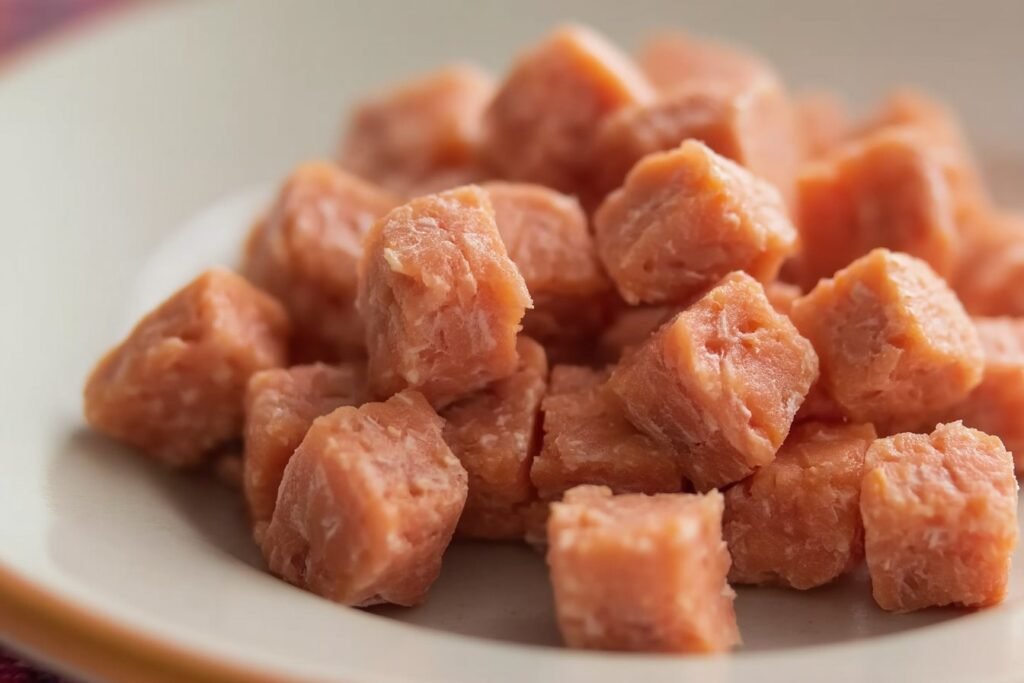
Instructions Process of Soft Salmon Cat Treat Bites
Stir the mixture until it comes together into a soft, slightly sticky dough. If it feels too wet and pools a bit at the bottom of the bowl, add an extra teaspoon or two of oat flour until it holds together when pinched. If it’s dry or crumbly and won’t clump, drizzle in a tiny splash of water (about 1 teaspoon at a time) and mix again. Aim for a texture similar to thick cookie dough—soft, but able to hold a shape when you scoop it. Once the dough feels right, you’re ready to portion it into bite-size balls or little discs, which helps keep the Soft Salmon Cat Treat Bites tender after baking. Don’t worry if each piece isn’t perfectly uniform; your cat will only be judging the smell, not the symmetry.
Make-Ahead & Storage
These Soft Salmon Cat Treat Bites are perfect for prepping ahead so you always have a tiny “bribe” ready for nail trims or carrier time. Once the bites are completely cool, transfer them to an airtight container and refrigerate for up to 5–6 days. I like using a small glass jar so I can quickly see how many are left. Because these are moist, high-protein treats made with salmon and egg, they should not be left on the counter for more than 1–2 hours. If your kitchen runs warm or humid, lean toward the shorter fridge time and always give them a quick sniff before serving.
For longer storage, freeze the Soft Salmon Cat Treat Bites in a single layer on a parchment-lined tray, then move them to a freezer bag or container once solid. Label with the date and use within 2 months for the best aroma and texture. You can thaw a few at a time in the fridge overnight, or let a treat sit at room temperature for about 5–10 minutes before offering it to your cat. The bites will stay soft after freezing, especially if you don’t overbake them in the first place. Because each piece is small (around 10 calories), you can pull out just what you need for the week and keep the rest safely frozen, just like you would with any other recipes\-for-sensitive-stomachs/” target=”_blank” rel=”nofollow noopener”>homemade cat treats.
Best Ingredients & Party Variations
For the softest, most tempting Soft Salmon Cat Treat Bites, start with high-quality canned salmon that’s boneless, skinless, and packed in water, not oil or brine. Oil-packed fish can upset sensitive kitty tummies, and added salt isn’t ideal for cats. I like to drain the salmon really well, then mash it until it looks almost like a paste—this helps the treats hold together and keeps the texture tender for picky or older cats. Use plain oat flour (you can blitz old-fashioned oats in a blender) so you avoid extra sodium or flavorings. If your cat enjoys a stronger aroma, choose wild-caught salmon, which tends to smell a bit bolder—in a good way, at least to cats.
Once you’ve mastered the base recipe, you can turn these Soft Salmon Cat Treat Bites into a full-on kitty “party platter.” For a crunch-meets-soft combo, bake half the batch a few minutes longer until lightly crisp on the edges, and keep the rest just barely set for softer bites. For a “catnip bar,” divide the dough into 2 bowls: leave one plain and stir 1 tablespoon dried catnip into the other, so your cat can “choose” their favorite. You can also make fun themed shapes by pressing the dough into tiny silicone molds (hearts for gotcha days, stars for holidays), just keep them small enough for safe, one-bite chewing. If your vet approves, you can even serve these alongside a few simple tuna or chicken-based bites from your other easy cat treat recipes for a little feline celebration spread.

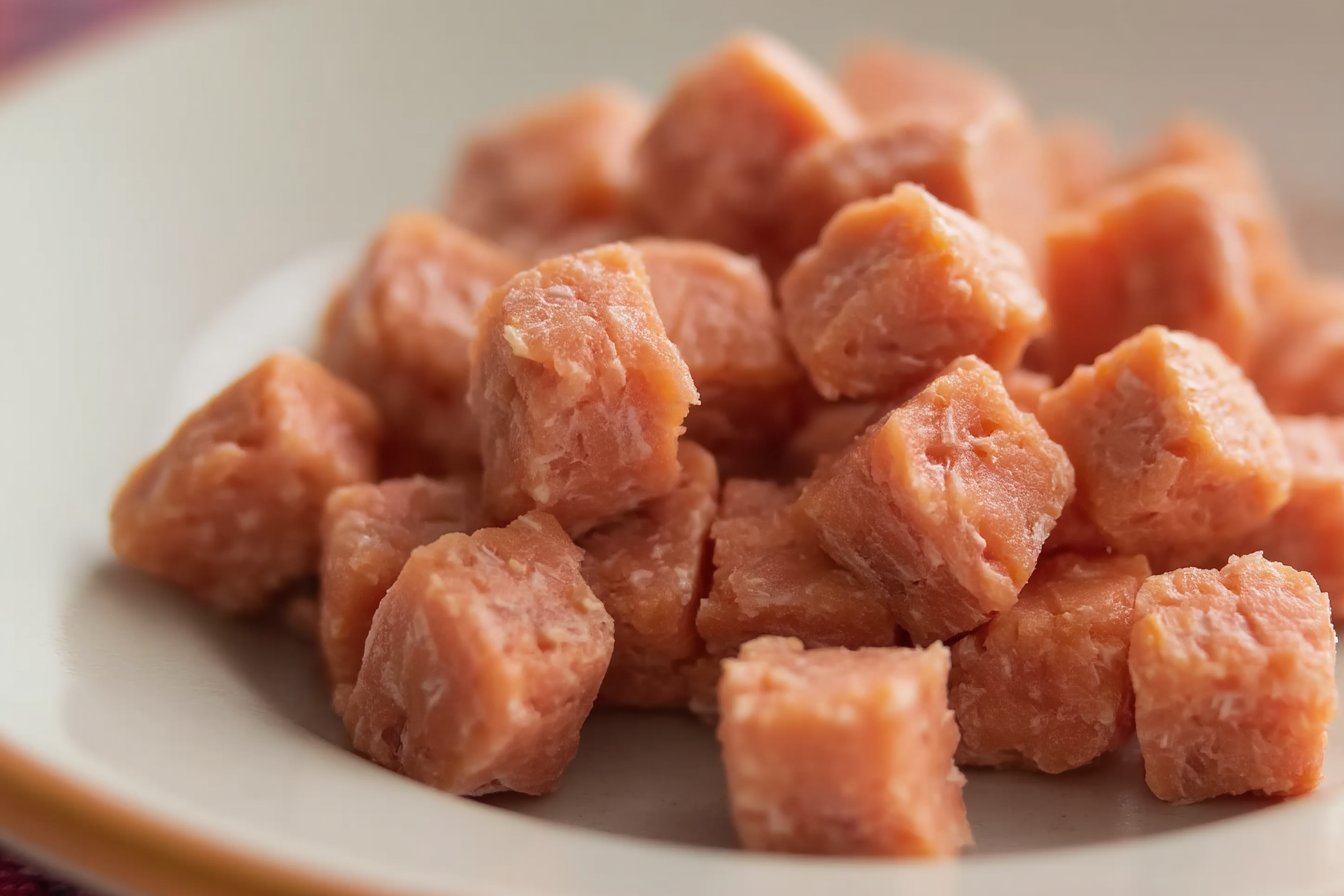
Serving of Soft Salmon Cat Treat Bites
Conclusion
There’s something really sweet about setting aside a few minutes to bake for the furry little heartbeat in your home. These Soft Salmon Cat Treat Bites aren’t just about sneaking extra nutrition into your kitty’s day—they’re about creating small, cozy rituals together. Maybe it’s the way your cat suddenly appears in the kitchen the second the salmon aroma hits the air, or how those slow blinks of approval feel like the ultimate five-star review.
I love how a simple recipe can bring the whole household together: you mixing and baking, your cat supervising from the safest counter-approved distance (in theory, at least), and everyone sharing a quiet moment when the first warm treat cools enough to taste. Those are the tiny memories that add up to a happy, loved pet—and a very proud pet parent.
I’d love for you to try this recipe, tweak it to your cat’s preferences, and make it your own special tradition.
For more delicious recipes like this, follow us on social media!
Can I use fresh salmon instead of canned in Soft Salmon Cat Treat Bites?
Yes, you can swap canned salmon for cooked fresh salmon in these Soft Salmon Cat Treat Bites. Make sure the salmon is fully cooked, boneless, skinless, and unseasoned—no oil, garlic, onion, or salt. Flake it very finely so the dough mixes evenly and the bites stay soft and uniform. You may need to add a teaspoon or two of water if the mixture feels drier than it would with canned salmon. Always cool the salmon completely before mixing it into the dough so the egg doesn’t start to cook too early.
How should I store Soft Salmon Cat Treat Bites and how long do they last?
Store fully cooled Soft Salmon Cat Treat Bites in an airtight container in the refrigerator for up to 5–7 days. Because they’re soft and made with fresh salmon and egg, they spoil faster than crunchy commercial treats. For longer storage, freeze them in a single layer on a tray, then transfer to a sealed freezer bag or container for up to 2 months. Thaw a few treats at a time in the fridge or at room temperature before serving. If you ever notice an off smell, mold, or a slimy texture, discard the treats right away.
What if the Soft Salmon Cat Treat Bites dough is too dry or too wet?
If the dough for your Soft Salmon Cat Treat Bites is dry or crumbly, add water 1 teaspoon at a time and mix until it clumps together easily. You want a soft, pliable dough that holds its shape when rolled into a small ball. If it becomes too sticky or wet, sprinkle in a bit more oat flour and stir gently. Avoid big adjustments all at once, or the texture may turn dense or pasty. A slightly messy dough is fine—your cat cares more about the smell than the perfect shape.
Recipe
Soft Salmon Cat Treat Bites
Ingredients
Method
- Preheat the oven to 350°F and line a baking sheet with parchment paper.
- Place the drained salmon in a medium bowl and mash it well with a fork until no large chunks remain.
- Add the egg, oat flour, and catnip if using, then stir until a soft dough forms.
- If the dough seems too dry or crumbly, mix in the water a little at a time until it holds together and is soft but scoopable.
- Scoop small portions of dough and roll or press them into small balls or flat discs about 1/2 inch wide.
- Arrange the shaped bites on the prepared baking sheet, spacing them slightly apart.
- Bake for 10 to 15 minutes, until the treats are set and just lightly golden but still soft.
- Remove the pan from the oven and let the treats cool completely on the baking sheet before serving to your cat.
Notes
- For longer storage, freeze baked treats for up to 2 months and thaw a few at a time before serving.