Ingredients
Method
- Add blueberries to a blender or food processor and blend until completely smooth; strain through a fine mesh sieve if you prefer a smoother texture.
- Transfer the blueberry puree to a small saucepan and add the coconut oil and optional honey.
- Warm the mixture over low heat, stirring often, until the coconut oil is fully melted and the mixture is warm but not boiling.
- Sprinkle the agar agar powder evenly over the warm mixture and let it sit undisturbed for 1 minute to bloom.
- After blooming, whisk the mixture continuously over low heat for 2 to 3 minutes until the agar agar is fully dissolved and the liquid is smooth and slightly thickened.
- Remove the saucepan from heat and carefully pour or spoon the mixture into silicone molds, filling each cavity almost to the top.
- Gently tap the molds on the counter to release any air bubbles and smooth the tops.
- Place the filled molds in the refrigerator and chill for 2 to 3 hours, or until the gummies are completely firm.
- Once set, pop the gummies out of the molds and transfer them to an airtight container.
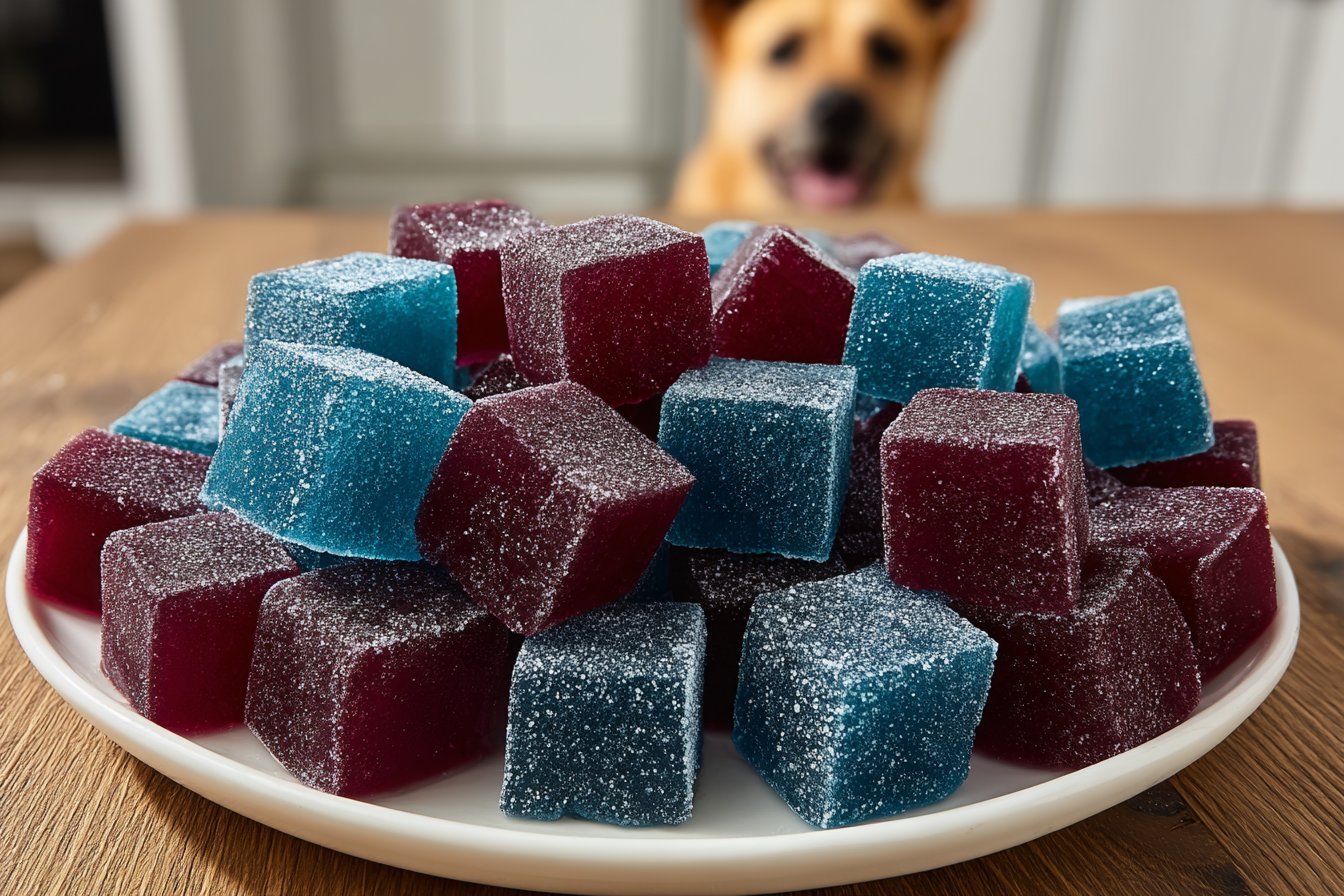
- Serve 1 to 2 small gummies to your dog, depending on size, and store the remaining gummies in the refrigerator.
Notes
- Store gummies in an airtight container in the refrigerator for up to 2 weeks.
- For longer storage, freeze the gummies for up to 3 months and thaw individual pieces in the refrigerator before serving.
- Limit most dogs to 1 to 2 small gummies per day because these treats are rich in fat.
- Only use the optional honey for dogs without blood sugar issues and avoid for diabetic or overweight dogs.
- Always introduce new treats gradually and consult your veterinarian if your dog has existing medical conditions, pancreatitis history, or food sensitivities.
- For longer storage, freeze the gummies for up to 3 months and thaw individual pieces in the refrigerator before serving.
- Limit most dogs to 1 to 2 small gummies per day because these treats are rich in fat.
- Only use the optional honey for dogs without blood sugar issues and avoid for diabetic or overweight dogs.
- Always introduce new treats gradually and consult your veterinarian if your dog has existing medical conditions, pancreatitis history, or food sensitivities.